The West Divided
A new paradigm is born in international relations, and Europe can benefit.

My first undergraduate degree was in International Relations. An interesting subject, but one I never really looked for work in. It was a surreal time to study the subject, as my first lectures came 2 weeks after 9/11 and much of the next few years was spent trying to pick through where the world was going after what had seemed like a hiatus between the end of the Cold War and 2001. As with many university subjects, there was a strong leftward spin to lots of theories and ideas even in IR was less prone to that than its sister subjects of International Development and Conflict Resolution. IR tended to attract the “hard edged” students - the males, the ex-military, the right wing, the sporty and those from cultures where a degree of nationalism was still acceptable.
One of the theories which the 9/11 attacks, and the following War on Terror, pushed into the limelight was Samuel Huntington’s Clash of Civilisations. It wasn’t a well liked theory; nothing which based its deductions on notions of race and culture was going to be at that time. Added to that it famously noted that “Islam has bloody borders” and that the Muslim world was very frequently involved in conflict with neighbouring civilizations. These two points made it a hard sell amongst the think tanks and intelligentsia, although as Huntington himself asked “If not civilizations, then what?”
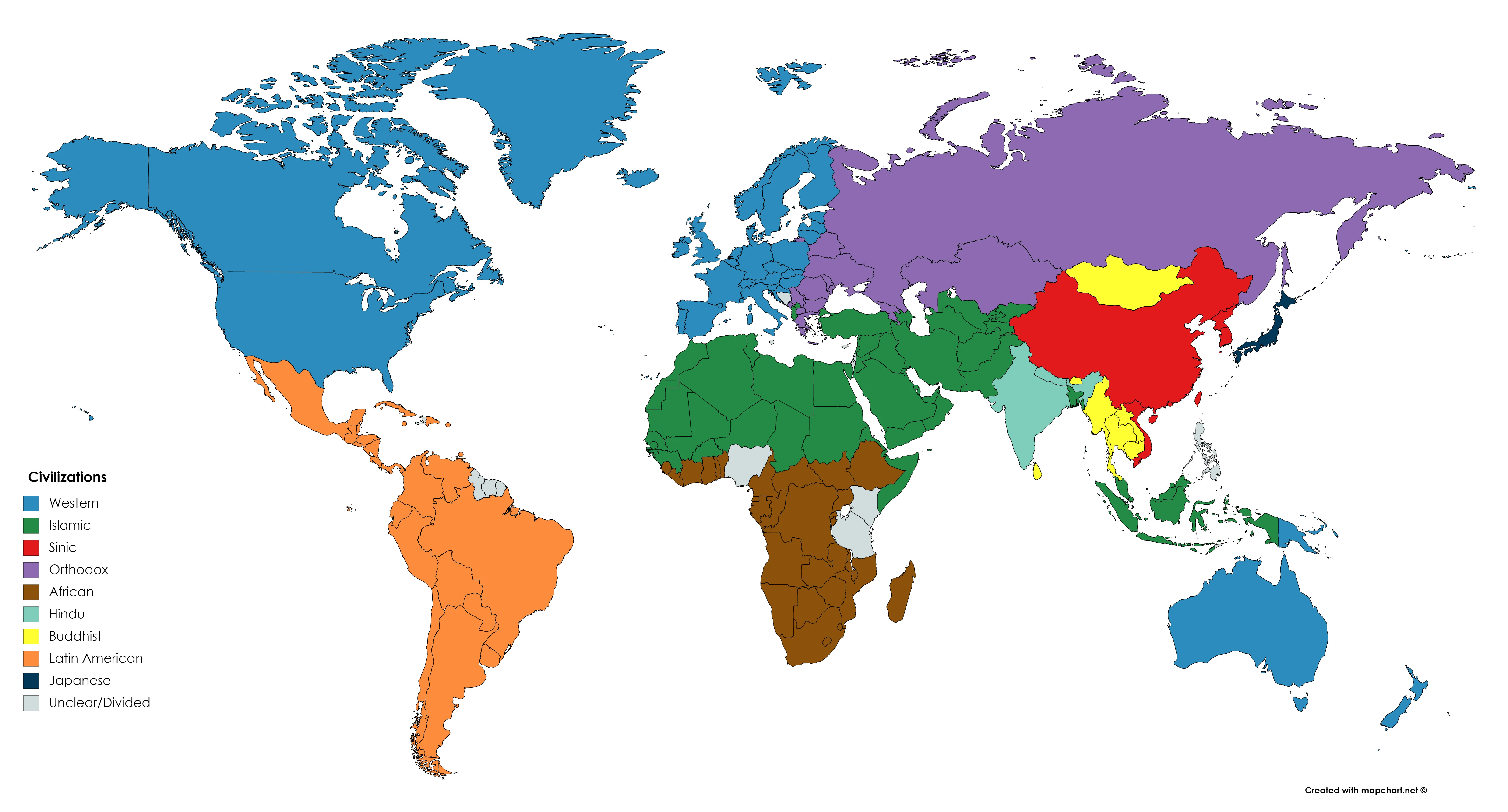
The book did manage to predict some conflicts, such as the war between Russian and Western cultures in Ukraine, some of the splits between African and Islamic cultures which can be used to explain conflicts as far apart as Nigeria and Somalia. On the other hand, it never really felt like it got the Asian divides right and painted the whole region with an overly broad brush.
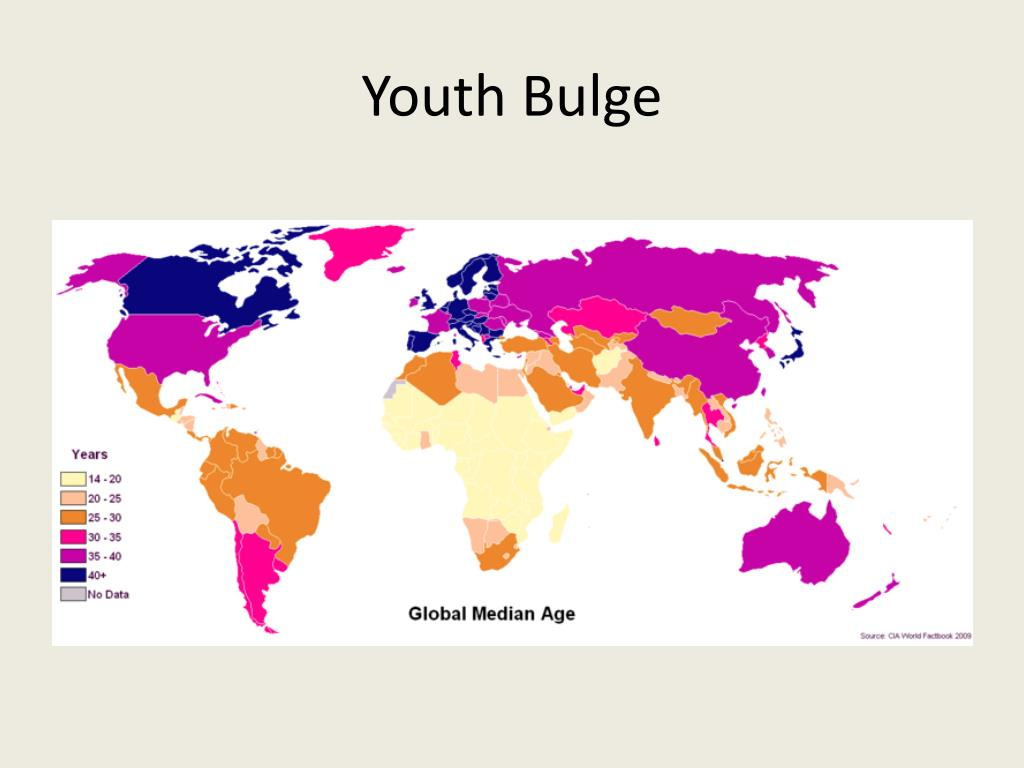
The second main thrust of Huntington’s arguments was a demographic one. He tied into work done by others on the “Youth Bulge” phenomenon, where a surplus of young men (especially single ones) makes a a country much more unstable and prone to violence. Of course, it’s a chicken and egg argument because you tend to find that states with a lot of young men have often gone through disruptions and dislocations which have skewed their birth rates. Nonetheless, it’s an interesting enough idea and one which I dedicated my undergraduate thesis to. I remember arguing that it even if the idea was correct it wasn’t especially useful as there were few politically acceptable policies which could be created to alleviate it. Migrating the youth bulge to Europe en masse wasn’t something I believed to be politically plausible in 2004.
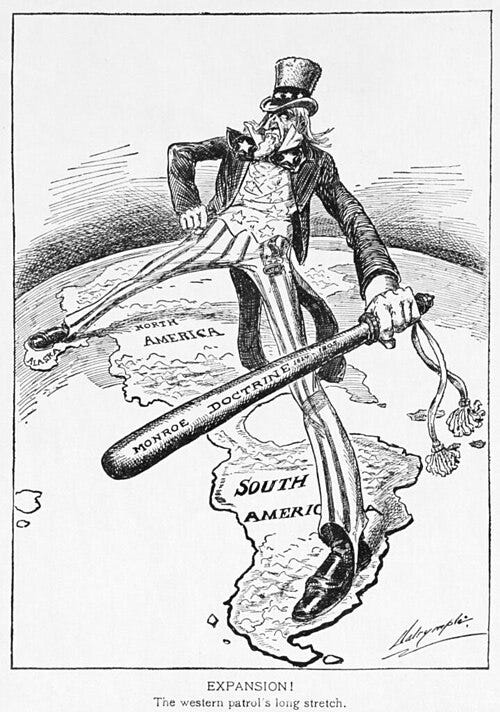
This has all come back to mind in light of Trump’s recent re-invigoration of the Monroe doctrine in the Americas. His Venezuelan success was followed up by the rupture with Europe over the future of Greenland. I have one American friend who interprets most of these issues as a cultural one where Europe excpects Trump to act more presidentially than he ever manages. This rather misses the point, by undermining your own new trade agreements and offering the stick (in a crude manner) rather than the carrot the United States has drawn the dividing line through the middle of western civilization.
This gives two interesting directions. The first is that we may see the US becoming more and more like Latin America. This runs from racial and demographic change, to growing inequality, through massive fraud and the rhetoric over imprisoning your political opponents. Perhaps the 2030s will see a more Latinised US?
In Europe it’s quite the opposite. For the first time since 1945 for many, and since the fall of the USSR for the rest, Europe has got to work out its own policies and directions internationally. We will quickly see that the EU isn’t really fit for purpose for doing so - it’s very existence is steeped in managerialism and bureaucracy which belong to the narrative of a spent, liberal, declining and weak Europe. Instead we’re likely to see a desire for a concert of European nations working in both their own and mutual interest. This also avoids the issue of keeping one of Europe’s nuclear powers (the UK) and one of the few nations who could genuinely aid Finland (Norway) out of any plan.
The current US administration has been quick to point out that Europe has enjoyed a period of security, largely underwritten by American military spending. This is true, but is somewhat offset by NATO standardisation playing to the strengths of American industries and arms. Europe does need to re-jig its spending - away from welfare and towards the future, but this isn’t dependent on some NATO guideline. European rearmament isn’t a simple thing either.

Any European plan though has to be tied into a total change of outlook for European countries - namely governing with the aim of building a country worth defending, a country which puts their own people first. In the light of 35 years of following America by default, of prioritising the Other over the Own and of Liberal Managerialism Europe’s real challenge is to create a new foundation to build a foreign and defence policy upon.
Sharp analysis on how Trump is splitting the West at a civilizational level, not just diplomatic. The latinization trajectory for the US paired with Europe needing to rebuild foundational identity after outsourcing strategy feels spot-on. I've watched organizations lose institutional knoledge after offshoring core functions, this seems like the geopolitical version of that. The question is whether Europe can actually develop independent foriegn policy or if bureaucratic inertia wins.